

Preface
Embroidered patches offer a timeless, creative way to personalize clothing, accessories, and various items. Whether for fashion, branding, or DIY projects, embroidered patches are durable, cost-effective, and customizable. This guide explains the basics of embroidered patches, how to create and apply them, and the best practices for maintaining their quality.
1. What Is an Embroidered Patch?
An embroidered patch is a fabric patch that features a design created by stitching thread into the material. The texture of the threads gives the patch a raised and colorful pattern, making it stand out. These patches are commonly applied to clothing, hats, bags, and other fabric items for decorative purposes.
2. Common Uses of Embroidered Patches
- Embroidered patches are commonly used to add logos, designs, and slogans to clothing items such as jackets, shirts, hats, and bags. These patches can elevate simple garments into personalized fashion pieces, adding texture and depth to the design.
- Many sports teams use embroidered patches on uniforms to display their team logos, mascots, or names. These patches are durable and create a uniform, professional appearance for athletes and supporters.
- Businesses often use embroidered patches to promote their brands by incorporating their logos and messages onto uniforms, apparel, and promotional materials. These patches serve as effective branding tools, helping to increase brand recognition and visibility.
- Embroidered patches are also a popular choice in crafting and DIY projects. They can be added to bags, blankets, pillows, and other home décor items to create unique, personalized touches.
3. Types of Embroidered Patches
-
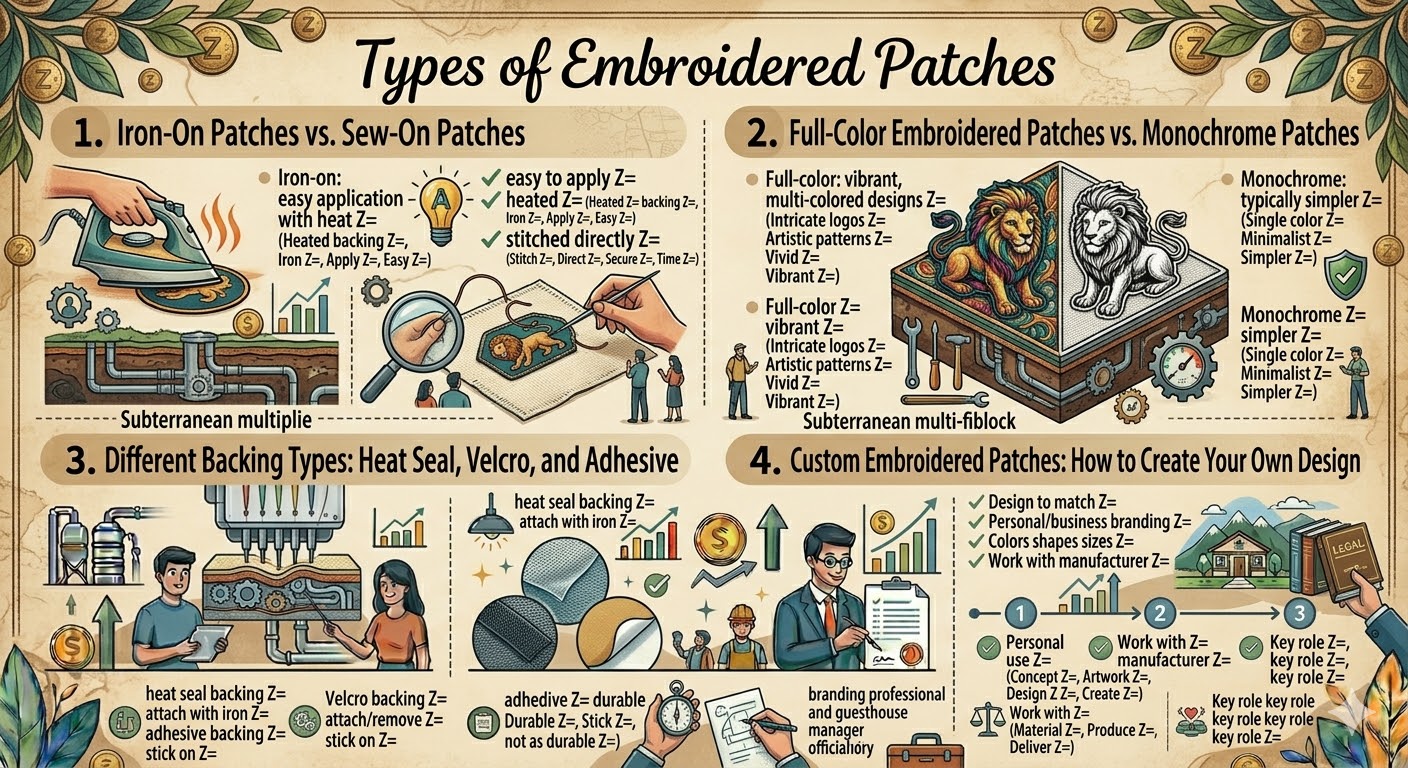
Iron-On Patches vs. Sew-On Patches:
Iron-on patches come with an adhesive backing that can be activated by heat, making them easy to apply with an iron. Sew-on patches are stitched directly onto the fabric for a more permanent attachment, providing a secure hold over time. -
Full-Color Embroidered Patches vs. Monochrome Patches:
Full-color embroidered patches allow for vibrant, multi-colored designs, making them ideal for intricate logos or artistic patterns. Monochrome patches are typically simpler, often using a single color for a more minimalist approach. -
Different Backing Types: Heat Seal, Velcro, and Adhesive:
Heat seal backing allows you to easily attach the patch with an iron. Velcro backing enables you to attach and remove patches easily, ideal for temporary designs or military uniforms. Adhesive backing allows patches to be stuck onto items without the need for sewing or ironing, but may not be as durable. -
Custom Embroidered Patches: How to Create Your Own Design:
Custom embroidered patches can be designed to match your specific needs, whether for personal use or business branding. You can choose from different colors, shapes, and sizes, and work with manufacturers to create the perfect patch. -
4. How Are Embroidered Patches Made?
-
The Materials Used for Embroidered Patches:
Embroidered patches are typically made with a fabric base (often felt or twill), high-quality embroidery thread, and a backing that provides structure and durability. The threads used can range from standard cotton to polyester or rayon, depending on the desired finish. -
The Embroidery Process: How Machines Create Intricate Designs:
The design is first digitized into a format that embroidery machines can read, and then the machine stitches the design into the fabric using threads. This process allows for intricate details and sharp outlines that make the design stand out. -
The Difference Between Handcrafted and Machine Embroidered Patches:
Handcrafted patches are typically made with more attention to detail and can include more unique, intricate designs. Machine-made patches, while faster and more cost-effective, may not offer the same level of customization but are still high-quality for most applications. -
Why Quality Thread and Fabric Matter for Long-Lasting Patches:
The quality of the thread and fabric used in embroidered patches directly affects their longevity. Using high-quality threads and durable fabric ensures that the patch will maintain its texture, color, and integrity over time.
5. How to Apply an Embroidered Patch
-
Ironing on Embroidered Patches:
Position the patch on your fabric where you want it to be applied. Set your iron to medium-high heat (without steam). Place a cloth over the patch and press the iron down for 10-20 seconds. Allow the patch to cool before moving the fabric to ensure it adheres securely. -
Sewing Embroidered Patches:
Use a matching thread to sew around the edges of the patch. Ensure the patch is securely attached by stitching over the edges multiple times. Double-check placement to ensure the patch is aligned properly on the fabric. -
The Best Method for Attaching Embroidered Patches to Different Fabrics:
Choose the method based on the fabric you are working with. Iron-on patches work well with cotton and polyester, while sew-on patches are more durable for leather or heavy-duty fabrics. -
How to Ensure Your Custom Patch Stays Secure:
To ensure your patch stays in place, choose the proper application method and follow the manufacturer’s guidelines. Consider reinforcing iron-on patches with stitching to make them even more secure.
6. Advantages of Using Embroidered Patches
- Embroidered patches are known for their durability. The high-quality materials and strong stitching ensure that the patches remain intact and vibrant for years, even with frequent use.
- The texture of embroidered patches adds dimension to clothing, bags, and accessories. The raised threads give the design a tactile element that flat prints cannot achieve.
- Compared to other forms of customization, embroidered patches are an affordable way to create personalized items, especially when ordered in bulk.
7. How to Care for Embroidered Patches?
- To care for embroidered patches, wash the item gently in cold water and avoid using harsh chemicals. Air dry items whenever possible to prevent heat damage.
- Keep embroidered patches from excessive friction, and avoid exposing them to direct heat or sunlight. Regularly check the patches for wear and tear.
- Store items with embroidered patches in a cool, dry place to prevent the patch from becoming damaged. Avoid folding or storing them in tight spaces to maintain their shape.
8. Popular Designs for Embroidered Patches
- Embroidered patches are widely used in branding, often displaying company logos or team emblems. These patches are great for uniforms, bags, and promotional items.
- Floral patterns, vintage logos, and retro designs are popular for fashion items like jackets, hats, and accessories. These patches allow you to express your personal style while adding a unique element to your wardrobe.
- Teams, military units, and corporate offices often use embroidered patches to display logos, slogans, or emblems. These patches promote unity and identity within the group.
- Embroidered patches can be used in DIY projects like personalized clothing, accessories, or even home décor. Creating custom designs for gifts adds a personal touch to special occasions.
9. Where to Buy Embroidered Patches
- You can purchase embroidered patches from a variety of online retailers like Etsy, Amazon, or specialty craft stores.
- Look for manufacturers with strong customer reviews and a history of successful custom designs. Many online platforms also offer tools to design your own patches.
- Pricing for embroidered patches varies based on design complexity, size, and quantity. Most manufacturers offer bulk discounts, making it more affordable for larger orders.
Common QA
Q1: What is an embroidered patch?
A: An embroidered patch is a fabric patch that features a design made from thread, creating a textured and colorful pattern. These patches can be applied to clothing, bags, hats, and more.
Q2: How are embroidered patches made?
A: Embroidered patches are typically made by stitching thread into fabric using a machine or by hand. The design is created by threading colored threads onto the fabric to form the desired image or text.
Q3: How do I apply an embroidered patch to clothing?
A: You can apply an embroidered patch by either ironing it on, sewing it onto the fabric, or using an adhesive backing. The method you choose depends on the fabric and patch type.